Eco-Friendly Tree Removal Services and Responsible Wood Disposal
Tree work has always carried a contradiction. People call when a tree has become unsafe, unwanted, storm-damaged, or simply too large for the space. Yet the same clients often care deeply about shade, habitat, soil health, and the look of a mature landscape. Good tree care sits in that tension. The goal is not to remove more than necessary. It is to make careful decisions, preserve what can be preserved, and handle the resulting wood, brush, and root material with as little waste as possible.
That is where eco-friendly tree removal earns its keep. It is not a marketing phrase if the company means it. It shows up in the first site visit, in whether a crew suggests Tree Pruning & Crown Shaping instead of a full removal, in how they protect the root zones of neighboring plants, and in what happens to every log and branch once the truck pulls away. The difference between responsible work and careless work can be measured in erosion, landfill tonnage, fuel use, soil compaction, and whether the next tree on the property has a fair chance to thrive.
In practice, sustainability in tree care is less about perfection and more about judgment. A decaying oak over a bedroom roof may need immediate removal. A leaning pine on an open acreage may simply need monitoring, support, or selective reduction. The best contractors know the difference, and they explain it plainly.
The first question should not be “how fast can you remove it?”
A professional company should start by asking why the tree is being considered for removal at all. Sometimes the reason is obvious. Storm failure, root plate movement, severe trunk decay, lightning strike damage, or a tree split down the main union can leave little room for debate. This is where Dangerous Tree Assessment and Removal becomes necessary, and delaying can raise both safety and cost.
Other times, the reasons are softer. Excess shade, fallen leaves in a pool, lifting pavers, blocked views, or fear after seeing a few dead limbs. Those issues matter, but they do not always justify taking down a mature tree. A skilled crew, especially one that includes a Certified Arborist Consultation, may recommend structural pruning, crown thinning, selective reduction, or Tree Cable and Bracing to lower the risk while preserving the canopy.
That distinction matters environmentally. Keeping a healthy or salvageable tree almost always has the lighter footprint. A mature tree moderates temperature, supports birds and pollinators, slows runoff, and stores carbon. Replacing it with a sapling helps eventually, but not right away. A ten-year recovery gap is common after removing a large tree, and the landscape often feels harsher long before the new planting catches up.
I have seen properties where the owner requested removal of three “problem trees,” only to realize during the assessment that two needed pruning and one needed support. The result was a safer yard, lower cost, and almost no disruption to surrounding beds. That is what responsible service looks like. It is not simply the ability to cut. It is the willingness to say no to unnecessary cutting.
What makes tree removal genuinely eco-friendly
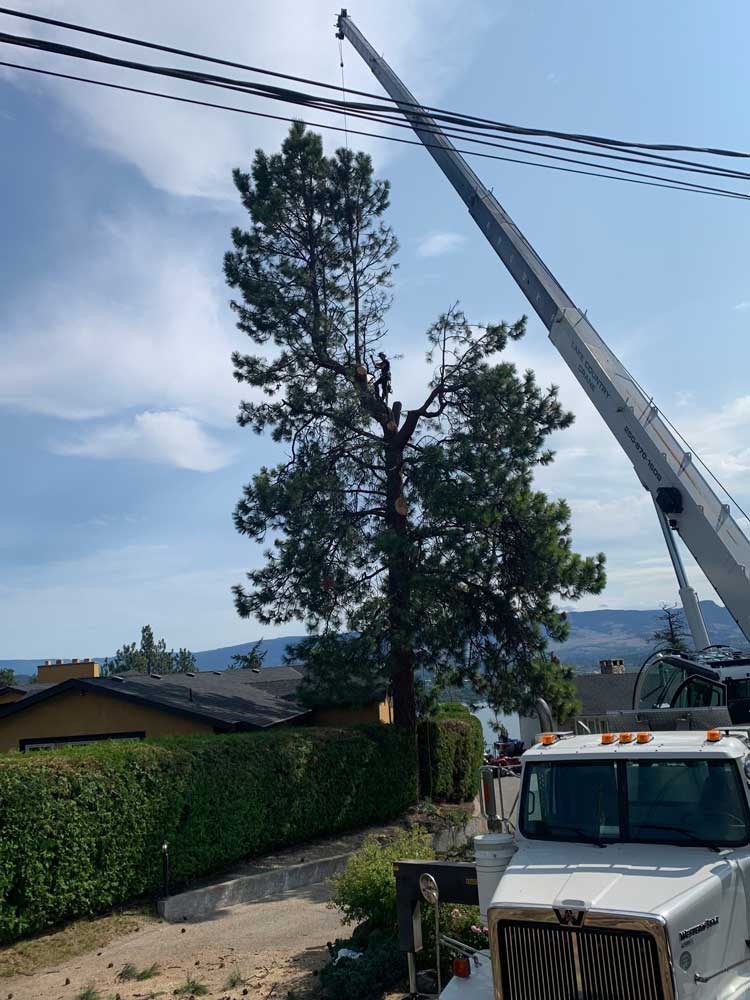
Eco-friendly Tree Removal Services do not begin with disposal. They begin with planning. The crew should look at access, soil conditions, nearby irrigation, hardscape, understory plantings, utility lines, and opportunities to dismantle the tree in sections rather than flatten a wide area with heavy equipment. On delicate sites, that may mean climbing and rigging instead of bringing in the largest possible machine. On wet ground, it may mean postponing until the soil can bear traffic without turning root zones into ruts.
There is also the issue of collateral damage, which often gets ignored. I have walked sites after low-bid removals where lawn trenches were deep enough to twist an ankle, ornamental trees had bark peeled by lowering ropes, and shrub beds were buried under chips mixed with plastic bottles and chain oil rags. A clean finish is not just cosmetic. It reflects whether the crew worked with care.
Fuel efficiency and machine choice matter too, though they rarely get discussed with homeowners. Newer chippers and trucks generally burn cleaner than older fleets, and efficient routing reduces unnecessary drive time between jobs. Electric saws and battery-powered hand tools now have a place on many pruning and light dismantling projects, especially in noise-sensitive neighborhoods, though large removals still rely heavily on gas and diesel equipment. There is no point pretending otherwise. Sustainable practice in this industry is often incremental. Better routing, sharper chains, cleaner equipment, fewer repeat trips, and smarter material recovery all make a difference.
Another sign of responsible work is honest sorting. Wood should not all go into one waste stream. Trunk sections suitable for milling, firewood, habitat logs, or woodworking blanks deserve a different path than diseased brush or vine-infested debris. Mixing clean hardwood with contaminated yard waste is the easiest option for the crew, but it is rarely the best one.
Removal is sometimes the most responsible choice
There is a tendency in some conversations to treat every removal as environmentally suspect. That is too simple. Trees can outgrow their setting, decline beyond recovery, or become active hazards. Once a tree begins to fail structurally, preservation can become risk transfer. The question shifts from “can we save it?” to “what will it hit when it comes apart?”
Emergency Tree Services deal with that reality every season. After wind events, ice loads, or saturated soils, some trees are no longer candidates for careful rehabilitation. A root plate that has lifted even a few inches can mean the anchoring system has been compromised. A long vertical crack through a co-dominant stem often worsens quickly. A hanging limb over a driveway may look manageable from the ground and turn out to be under dangerous tension once a climber gets near it.
In those moments, eco-friendly practice means doing the necessary work with precision and recovering as much useful material as possible afterward. Safety comes first. No responsible arborist will gamble with a compromised stem in the name of idealized sustainability. But once the site is stabilized, there is still room for good decisions. Logs can be milled locally. Brush can be chipped for reuse. Clean wood can become firewood, rustic edging, or erosion control on the same property.
The same logic applies to Wildfire Mitigation Tree Services. In fire-prone regions, reducing ladder fuels, thinning overcrowded stands, and removing dead or stressed trees near structures can be part of sound land stewardship. Homeowners sometimes resist this because the work feels counterintuitive. Yet dense, unhealthy growth close to a house is not the same as a resilient, well-spaced canopy. Done correctly, mitigation work is selective. It aims to preserve the healthiest, best-placed trees and reduce the conditions that allow surface fires to climb into crowns.
The wood does not have to become waste
The biggest missed opportunity in tree work is often the wood itself. Many removals generate material that still has clear value, especially from species with dense, stable grain. White oak, black walnut, ash from non-infested areas, maple, cedar, and even some urban pine can be reused if processed promptly and stored properly. A good company will discuss these options before cutting starts, not after the rounds have already been loaded and mixed.
Large trunk sections can go to a local sawyer for live-edge slabs, beams, bench tops, or simple utility lumber. Homeowners are often surprised by this because they imagine that only forest-grown trees produce usable wood. Urban trees do come with challenges. They may contain embedded metal, reaction wood, or irregular grain from open-grown branching habits. Still, plenty of pieces make excellent furniture, mantels, garden structures, and custom shelving. I have seen a storm-damaged maple turned into a dining table for the same family that lost the tree. That kind of reuse carries emotional value as well as environmental sense.
Smaller rounds can become firewood, but here the details matter. Freshly cut wood is heavy and wet. Depending on species and climate, it may need six months to two years of seasoning to burn efficiently. Storing it directly against the house invites insects and moisture problems. A contractor who offers to leave firewood should also be realistic about volume. One medium deciduous tree can produce more split wood than an average homeowner can use in several seasons.
Wood chips are even more versatile. Fresh chips from clean, non-diseased trees can be used for paths, weed suppression, moisture retention, and temperature moderation around plantings. They should not be piled against trunks like volcanoes, and they should be used thoughtfully around species sensitive to persistent moisture at the crown. Spread correctly, a few inches deep and kept back from stems, chips are one of the easiest ways to return organic matter to the landscape.
There are limits. Wood from trees affected by certain pests or diseases may need special handling. Firewood movement is restricted in many areas because insects and pathogens hitch rides in logs. Material from heavily vine-covered trees or sites contaminated with trash, fencing, or paint may be poor reuse stock. Responsible disposal sometimes means separating and processing with those risks in mind, not forcing a reuse option that creates bigger problems later.
Stumps, roots, and the part homeowners forget to ask about
The visible tree gets most of the attention, but stump handling often determines whether a project feels truly finished. Stump Removal & Grinding is one of the most practical services a company can offer, yet it comes with trade-offs that deserve explanation.
Grinding is usually the lower-impact choice. A machine reduces the stump to chips below grade, often enough for turf, mulch, or shallow replanting. It is faster than full extraction and causes far less disturbance to surrounding soil. For many residential sites, especially tight backyards, grinding is the better environmental fit because it preserves more of the existing soil structure and minimizes the need for heavy excavation.
Full stump removal has its place. If the area is slated for a foundation, hardscape, utility trench, or new large tree planting, the roots may need to come out. The cost is a bigger disturbance footprint, more soil displacement, and usually more restoration afterward. In clay soils, this can create a bathtub effect where the backfilled area holds water differently than the surrounding ground. That is not a reason to avoid the work when it is needed, but it should be part of the planning conversation.
Grinding also leaves a byproduct, and this is another point where responsible companies differ. The resulting mix of chips and soil can often be reused on site as backfill or mulch in non-critical areas. It is less suitable for direct planting because it may tie up nitrogen as it breaks down. I usually advise clients to top dress the area with screened soil if they want grass to establish well, or to convert the spot into a mulched bed and let the biology settle before planting anything demanding.
Preservation tools that can prevent removals
Some of the most environmentally sound tree work never looks dramatic from the street. It may involve a few hours of pruning, a hardware installation hidden in the canopy, or a consultation that changes a client’s expectations.
Tree Pruning & Crown Shaping, when done correctly, reduces mechanical stress, removes deadwood, improves clearance, and can help a tree coexist with structures. The phrase “done correctly” matters. Topping is not pruning. Lion-tailing is not crown shaping. Over-thinning can produce weak regrowth and sunscald. Real pruning respects species biology, growth habit, and compartmentalization.
Tree Cable and Bracing can extend the service life of structurally challenged trees that still have good overall vigor. A split-prone union in a mature ornamental may be stabilized. A broad, heavy limb over a patio may be supported rather than removed. This is not a lifetime guarantee, and it does require periodic inspection. Hardware can fail, trees continue to grow, and loading changes over time. Still, in the right situation, support systems preserve canopy that would otherwise be lost.
Certified Arborist Consultation is especially valuable before major construction or landscape redesign. Many tree deaths are not caused by storms or age but by grade changes, trenching, over-irrigation, root cutting, or soil compaction during projects that had nothing to do with tree care. An arborist who gets involved early can save trees by setting protection zones, adjusting access routes, and explaining which roots matter most. It is remarkable how often a mature tree is removed as “declining” one or two years after a remodel, when the real cause was damage done during the build.
Sorting healthy material from risky material
Responsible wood disposal depends on what the tree was carrying. Clean, healthy wood has many options. Compromised material needs caution. This is where good crews earn trust because they do not lump everything together under the vague label of “green waste.”
A practical approach usually considers four questions:
- Is the wood structurally sound enough to mill or split?
- Does it show signs of regulated pests, active infestation, or contagious disease?
- Can the chips or logs be reused locally without moving a problem somewhere else?
- Is there a better ecological use on site, such as habitat placement or erosion control?
Those questions sound simple, but they call for experience. Fungal fruiting bodies on a trunk may indicate internal decay that limits lumber value. An insect issue may be cosmetic in one region and quarantined in another. Chips from healthy branches can feed a garden. Chips from diseased material may be better composted hot in a controlled setting or disposed of according to local guidance. Blanket rules rarely hold up across species and climates.
There is also a middle ground that more property owners are embracing, especially on larger lots. Not every log needs to leave. Some can be placed in out-of-the-way areas as wildlife habitat, nurse logs, or low retaining edges on naturalized slopes. This is not appropriate in every yard. Small urban lots, formal landscapes, and fire-prone zones may not be suitable. But on rural and semi-rural properties, keeping part of the tree on site can support fungi, insects, reptiles, and soil moisture with almost no processing at all.
Storm response without needless waste
After a storm, speed matters, but haste creates its own waste stream. I have seen emergency cleanups where crews mixed fence panels, plastic play equipment, shingles, brush, and trunk wood into the same load simply because the site was chaotic and the dispatcher wanted the road open. Sometimes that is unavoidable in the first phase of response. More often, a little sorting saves valuable material and reduces landfill disposal.
Emergency Tree Services should separate immediate hazard mitigation from full site restoration. First, make the area safe. Remove suspended limbs, clear access, stabilize broken stems, and protect structures. Then, once the pressure drops, decide what to salvage. A broken top may leave a trunk section suitable for milling. Large wood can be staged aside while brush is chipped. If the homeowner wants firewood or slabs, that needs to be identified early before the best sections are cut too short.
Storm work is also where Dangerous Tree Assessment and Removal becomes more nuanced. Trees adjacent to the obvious failure often suffer hidden damage. A partially uprooted neighbor may not fall that day, but the root shear can be severe. A conscientious arborist will explain those secondary risks rather than focusing only on the tree already on the house. That broader assessment prevents repeat mobilizations, additional fuel use, and another round of disruption a few weeks later.
Questions worth asking before you hire a company
Eco-friendly claims are easy to print on a truck door. They Stump Removal & Grinding are harder to prove in the yard at the end of the day. Before hiring, ask direct questions about both decision-making and disposal. The answers will tell you whether sustainability is part of the operation or just part of the sales pitch.
Ask whether removal is truly necessary or whether Tree Pruning & Crown Shaping, support systems, or monitoring are viable. Ask if a Certified Arborist Consultation is available, especially for mature specimens or complex sites. Ask what happens to logs, brush, and chips. Ask whether the company can leave mulch, cut firewood to length, or coordinate milling for valuable trunk sections. Ask how they protect lawns, roots, and irrigation during access. A serious operator will answer without sounding defensive.
You should also listen for what they do not promise. No ethical arborist will guarantee that every tree can be saved, that every log can be reused, or that every site can be left untouched by equipment. Real professionals discuss limitations. Wet weather may delay work. Disease may restrict chip reuse. Access may require mats, cranes, or a longer dismantle process that costs more. Honest constraints are a good sign.
The environmental value of doing less, but doing it better
The greenest tree removal is the one that never had to happen because the tree was planted in the right place, maintained early, and inspected before defects became emergencies. Yet landscapes are inherited, storms happen, trees age, and land use changes. Removal will always be part of responsible property care. The issue is whether it is done thoughtlessly or with restraint.
Eco-friendly Tree Removal Services are really a chain of decisions. Do we preserve or remove? If we remove, how do we minimize damage? If wood comes down, where can it go besides a landfill? Can the stump be ground rather than excavated? Can the chips stay on site and support the next generation of planting? Can wildfire mitigation be selective rather than indiscriminate? Can emergency work solve the hazard without turning recoverable material into mixed debris?
When those questions guide the job, the result is noticeably different. The property recovers faster. The owner feels informed rather than sold to. Fewer materials are wasted. And the landscape, even after a difficult removal, still reflects care.
That is the standard worth looking for, whether you need a single stump ground out, a dangerous tree removed over a roofline, or a broader plan that includes Tree Cable and Bracing, Wildfire Mitigation Tree Services, and long-term canopy management. The best tree work is not just about what comes down. It is about what remains healthier, safer, and more useful afterward.
Name: Ace Tree Services Ltd.
Address: 4656 Wallace Hill Rd, Kelowna, BC V1W 4C2, Canada
Phone: 250-212-9593
Website: https://acetree.ca/
Email: [email protected]
Hours:
Sunday: Closed
Monday: 7:00 AM–5:00 PM
Tuesday: 7:00 AM–5:00 PM
Wednesday: 7:00 AM–5:00 PM
Thursday: 7:00 AM–5:00 PM
Friday: 7:00 AM–5:00 PM
Saturday: 7:00 AM–5:00 PM
Time zone: Pacific Time
Open-location code / Plus code: RHF8+8G Kelowna, British Columbia, Canada
Map/listing URL: https://www.google.com/maps/search/?api=1&query=Google&query_place_id=ChIJxRVIBx2LfVMRNRSkp6-IC0U
Embed iframe:
Socials:
https://www.facebook.com/p/Ace-Tree-Services-61585901931447/
Ace Tree Services Ltd. provides professional tree care from its Kelowna location on Wallace Hill Road.
The official website lists tree removal, stump removal and grinding, tree pruning and crown shaping, emergency tree services, certified arborist consultation, dangerous tree assessment and removal, tree cabling and bracing, and wildfire mitigation.
Ace Tree Services serves homeowners, businesses, and property owners in Kelowna and throughout the Okanagan Valley.
The company’s official site highlights ISA Certified Arborist support, local Okanagan experience, and fully insured tree service work.
Customers can contact Ace Tree Services for planned tree maintenance, high-risk removals, storm-related tree concerns, pruning, stump grinding, and arborist consultation needs.
The supplied public listing address is 4656 Wallace Hill Rd, Kelowna, BC V1W 4C2, near rural and residential service areas in southeast Kelowna.
For tree services in Kelowna and the Okanagan, call 250-212-9593, email [email protected], or visit https://acetree.ca/
The public map listing uses plus code RHF8+8G Kelowna, British Columbia, Canada and can help customers find Ace Tree Services Ltd. near Wallace Hill Road.
Popular Questions About Ace Tree Services Ltd.
What does Ace Tree Services Ltd. do?
Ace Tree Services Ltd. provides tree removal, stump removal and grinding, tree pruning and crown shaping, emergency tree service, certified arborist consultation, dangerous tree assessment and removal, tree cabling and bracing, and wildfire mitigation.
Where is Ace Tree Services Ltd. located?
Ace Tree Services Ltd. is listed at 4656 Wallace Hill Rd, Kelowna, BC V1W 4C2, Canada.
What phone number should customers call?
Customers can call Ace Tree Services Ltd. at 250-212-9593.
What is the email address for Ace Tree Services Ltd.?
The supplied email address is [email protected].
What are Ace Tree Services Ltd.’s hours?
The supplied listing hours show Monday through Saturday from 7:00 AM to 5:00 PM, with Sunday closed, Pacific Time. The official website lists 7:00 AM to 5:00 PM, Monday through Friday, so customers should confirm Saturday availability before booking.
Does Ace Tree Services Ltd. provide emergency tree service?
Yes. The official website lists emergency tree services, including emergency tree removal, dangerous tree assessment, emergency stabilization, and limb or branch cleanup.
Does Ace Tree Services Ltd. offer arborist consultations?
Yes. The official services page lists certified arborist consultation as one of the company’s Okanagan tree services.
Does Ace Tree Services Ltd. provide stump grinding?
Yes. The official services page lists stump removal and grinding as a service.
What areas does Ace Tree Services Ltd. serve?
The official website states that Ace Tree Services serves Kelowna and the Okanagan Valley.
How do I contact Ace Tree Services Ltd.?
Call 250-212-9593, email [email protected], visit https://acetree.ca/, or use the listed social profile: Facebook.
Landmarks Near Kelowna, BC
Wallace Hill Road: The road listed for Ace Tree Services Ltd. and a practical reference point for the company’s Kelowna location.
East Kelowna: A nearby rural and residential area where tree maintenance, pruning, removals, and wildfire mitigation can be important for property owners.
Myra-Bellevue Provincial Park: A major outdoor landmark southeast of Kelowna and a useful reference for the surrounding hillside and forested areas.
Gallagher’s Canyon: A nearby Kelowna community with residential properties, mature trees, and landscape maintenance needs.
Kettle Valley: A southeast Kelowna neighborhood with homes, parks, and landscaped properties.
Mission Creek Greenway: A well-known natural corridor in Kelowna and a local reference point for tree-lined recreation areas.
Orchard Park Shopping Centre: A major Kelowna retail landmark and citywide reference point.
Downtown Kelowna: A central business and residential district within Ace Tree Services’ broader Kelowna service area.
Okanagan Lake: A major regional landmark running through Kelowna and the surrounding Okanagan Valley.
Mission Creek Regional Park: A recognizable Kelowna park and natural landmark with extensive trees and trails.
Rutland: A large Kelowna community with residential and commercial properties that may need tree service support.
Glenmore: A Kelowna neighborhood with homes, parks, and established trees.
Lower Mission: A residential and lake-adjacent Kelowna area where pruning, tree health, and property safety can matter for homeowners.
Kelowna International Airport: A major transportation landmark north of central Kelowna.
West Kelowna: A nearby Okanagan community across the lake and a practical regional service reference.
For tree removal, stump grinding, pruning, crown shaping, emergency tree service, arborist consultation, dangerous tree assessment, cabling and bracing, or wildfire mitigation near these Kelowna and Okanagan landmarks, contact Ace Tree Services Ltd. at 250-212-9593, email [email protected], or visit https://acetree.ca/